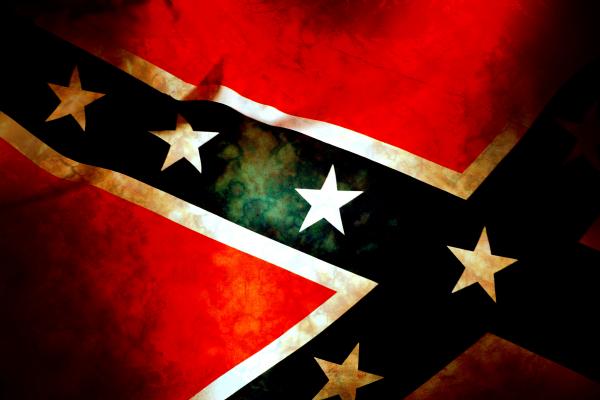
Virginia is popular for its fundamental role in the late Revolutionary and Civil War. Tourists would be hard pressed not to find poignant war memorabilia, monuments, and museums dedicated to the fact; including the legendary confederate battle flag – a historical reminder of the state’s political posture during the Civil War. Confederate symbolisms are scattered about the Virginia countryside to a mural of confederate Gen. Robert E. Lee on its capitol city’s canal wall. Even so, Virginia Governor Bob McDonnell has taken the alleged sentiments of southern pride a step further by designating April “Confederate History Month”. This statewide commemoration of the confederacy seems to be the straw breaking the back of racial tolerance as it is viewed more so appalling than commendable; citing marked disapproval, controversy and mass media scrutiny into McDonnell’s own racial disposition in lieu of this recent act and other gubernatorial policies.
In short, the Civil War split the northern and southern states of the union and according to Academy Award nominated filmmaker Ken Burns (who took six years out of his life to document the Civil War in its entirety), “it was the most horrible, necessary, intimate, acrimonious, mean-spirited, and heroic conflict the nation has ever known (Burns).” Notably, confederate soldiers touted their battle flag during opposition against the North to maintain the plantation economy and ideals of the south – which distinctly involved the practice of slavery by southern sharecroppers and aristocracy. It is this distinction that colors the dispute between those who think the flag merely symbolizes southern pride and/or honor for the fallen confederate soldiers, and the latter who think it’s a flagrant representation of racial prejudice. So, who if anyone is the April fool? “In his defense, McDonnell said "there were any number of aspects to that conflict between the states. Obviously, it involved slavery. It involved other issues. But I focused on the ones I thought were most significant for Virginia. I felt just as I've issued dozens and dozens of other commemorations, that it was something that was worthy of doing so people can at least study and understand that period of Virginia history and how it impacts us today (Yvette Carnell, SodaHead.com)." Others do not accept his ideology and see the action as a theoretical slap in the face to African-Americans. “It's offensive to celebrate slavery: Confederate History Month is a "glorification of slavery, racism, and treason," says Frances Martel in Mediaite. And it's hugely offensive, even if, as McDonnell claims, it's "just for the money" tourism will bring to the state. No one is arguing that the Confederacy should be "erased from memory," or school history lessons, but dedicating an entire month to it "implies a level of admiration (qtd. in The Week)."
Columnist Jason Pressburg expresses the patriot perspective, stating in his article dubbed Historic Meaning of the Confederate Flag still Wrong, “Ask anyone who has this symbol [confederate flag], and they'll most likely tell you it has something to do with "southern pride." But if you're a Northerner like me, you might become uneasy by this. No matter where you grew up, you will very likely receive an extremely biased education, especially regarding the Civil War. The New York public school district that I was taught in left me with the impression that it was a battle between the North, the good guys, and the South, the bad guys. The Northerners were abolitionists, fighting from the good of their hearts to end slavery. The Southerners were the cruel masters of the slaves, fighting to keep their wicked slavery ideals. I also came to college thinking the Confederate flag was and is an evil symbol of hate. (Obviously, I was in for a rude awakening when I came to Elon.) But to the Southerners I've met that identify with it, they think of the flag as a symbol of the joys and values of being Southern. Many of these qualities, like common courtesy, are some of the things that are so refreshing about the South compared to New York.” Meanwhile, moderates argue that McDonnell was wrong for not initially omitting mention of slavery and its influence in the matter when integrating Confederate History Month however it would be biased not to honor soldiers who fought in died in the war whether or not they are considered as columnist Rick Moran put it, “on the wrong side of history (qtd. in The Week)” or not. Well, one thing is certain; Gov. McDonnell is resolute in his decision but will have a lot of explaining to do in the coming weeks as temperaments are tested on the issue.